
Gout Arthritis: Why It Happens and How to Control It
Gout Arthritis: Why It Happens and How to Control It : Gout arthritis is one of the most painful and misunderstood forms of inflammatory joint disease. Many patients dismiss it as a temporary problem caused by diet or lifestyle, but in medical reality, gout is a chronic autoinflammatory disease with deep links to immune dysfunction, metabolic imbalance, and systemic inflammation. Managed incorrectly—or ignored—gout can permanently damage joints, kidneys, and overall quality of life.
According to modern rheumatology practice, gout requires expert evaluation by an experienced rheumatologist, often within a multidisciplinary autoimmune clinic, similar to conditions like Ankylosing Spondylitis, Psoriatic Arthritis (PsA), and Lupus.
What Is Gout Arthritis?
Gout arthritis is a form of inflammatory arthritis caused by excessive accumulation of uric acid in the blood. When uric acid levels rise beyond the body’s capacity to eliminate them, sharp urate crystals form and deposit inside joints, tendons, and soft tissues.
These crystals activate the immune system aggressively, producing intense inflammation—placing gout within the spectrum of autoinflammatory diseases treatment, not merely orthopedic pain.
Symptoms of Gout Arthritis
Early Symptoms
- Sudden, severe joint swelling and pain
- Most commonly affects the big toe, ankle, knee, or wrist
- Redness, warmth, and extreme tenderness
- Pain often begins at night and peaks rapidly
Advanced or Chronic Symptoms
- Recurrent gout attacks
- Persistent need for joint swelling treatment
- Formation of tophi (hard uric acid deposits)
- Joint stiffness and deformity
- Debilitating fatigue similar to Chronic Fatigue Syndrome
At this stage, management by a chronic pain rheumatologist becomes essential.
Why Does Gout Happen?
Gout is not just a food-related disease. It is a complex interaction of metabolism, genetics, kidney function, and immune response.
- Reduced kidney excretion of uric acid
- Genetic susceptibility
- Obesity, diabetes, hypertension
- High cell turnover or metabolic disorders
- Underlying immunodeficiency diagnosis
- Immune dysregulation seen in Lupus treatment and Psoriatic Arthritis (PsA) treatment
Patients may also show overlapping immune conditions like Sjögren’s syndrome, requiring care from a dry eyes dry mouth specialist.
Is Gout an Autoimmune Disease?
Gout is classified as an autoinflammatory disease, not a classical autoimmune disorder. However, its inflammatory pathways overlap significantly with autoimmune diseases managed at a top immunology hospital or best rheumatology hospital.
Gout frequently coexists with:
- Ankylosing Spondylitis
- Psoriatic Arthritis (PsA)
- Systemic Lupus Erythematosus
This overlap explains why biologic and immunomodulatory therapies may be required in severe cases.
How Is Gout Arthritis Diagnosed?
Accurate diagnosis is critical and should be done by an experienced rheumatologist. Diagnosis involves more than checking uric acid levels.
- Detailed clinical examination
- Blood tests for uric acid and inflammatory markers
- Joint fluid analysis when necessary
- Advanced imaging (Ultrasound / DECT)
- Biopsy for autoimmune disease in atypical or overlapping cases
This approach avoids misdiagnosis with rheumatoid arthritis or infectious arthritis.
Procedure of Treatment: How Gout Is Controlled
Management of Acute Gout Attacks
- Rapid suppression of inflammation
- Effective pain relief under a chronic pain rheumatologist
- Short-term anti-inflammatory medications
Long-Term Gout Control Strategy
- Uric acid–lowering therapy
- Metabolic and lifestyle correction
- Immunosuppressants treatment in complex inflammatory cases
- Biologics for autoimmune diseases in resistant or severe gout
Patients with allergic conditions may simultaneously require eczema treatment (allergic) as part of immune regulation.
Why Early Control of Gout Is Crucial
Untreated gout can lead to:
- Permanent joint destruction
- Chronic kidney disease
- Cardiovascular complications
- Loss of mobility and independence
The medical truth is firm: Gout is controllable, but not forgivable if ignored.
FAQs – Frequently Asked Questions About Gout Arthritis
Is gout arthritis curable?
Gout is not permanently curable, but it can be excellently controlled with proper long-term treatment.
Can young individuals develop gout?
Yes. Especially those with genetic risk, obesity, or immune disorders.
Is diet alone sufficient?
No. Diet helps, but medical therapy is essential.
Can gout affect organs other than joints?
Yes. Kidneys and cardiovascular system can be affected.
When should I see a rheumatologist?
At the first episode of unexplained joint swelling or recurrent attacks.
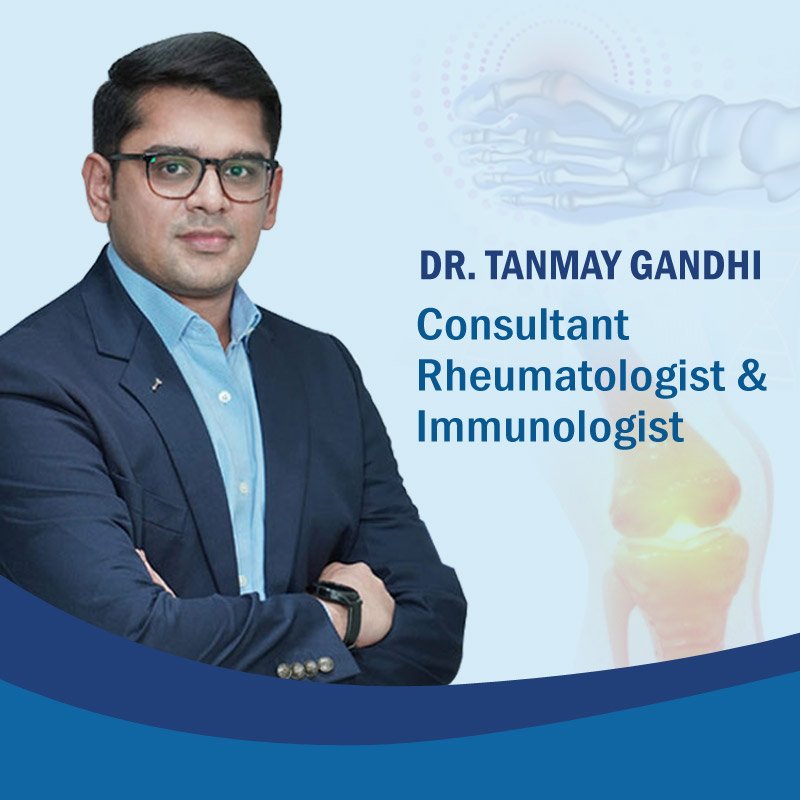
About Dr. Tanmay Gandhi – Consultant Rheumatologist & Clinical Immunologist, Nagpur
Dr. Tanmay Gandhi is a highly regarded Consultant Rheumatologist and Clinical Immunologist practicing in Nagpur, specializing in gout arthritis, Ankylosing Spondylitis treatment, Lupus treatment, Psoriatic Arthritis (PsA) treatment, and complex autoinflammatory diseases. He provides advanced care within a multidisciplinary autoimmune clinic model, integrating precise diagnostics, ethical use of immunosuppressants treatment, and modern biologics for autoimmune diseases. His practice reflects the standards of a best rheumatology hospital and top immunology hospital, offering patients long-term disease control with scientific rigor and compassion.